
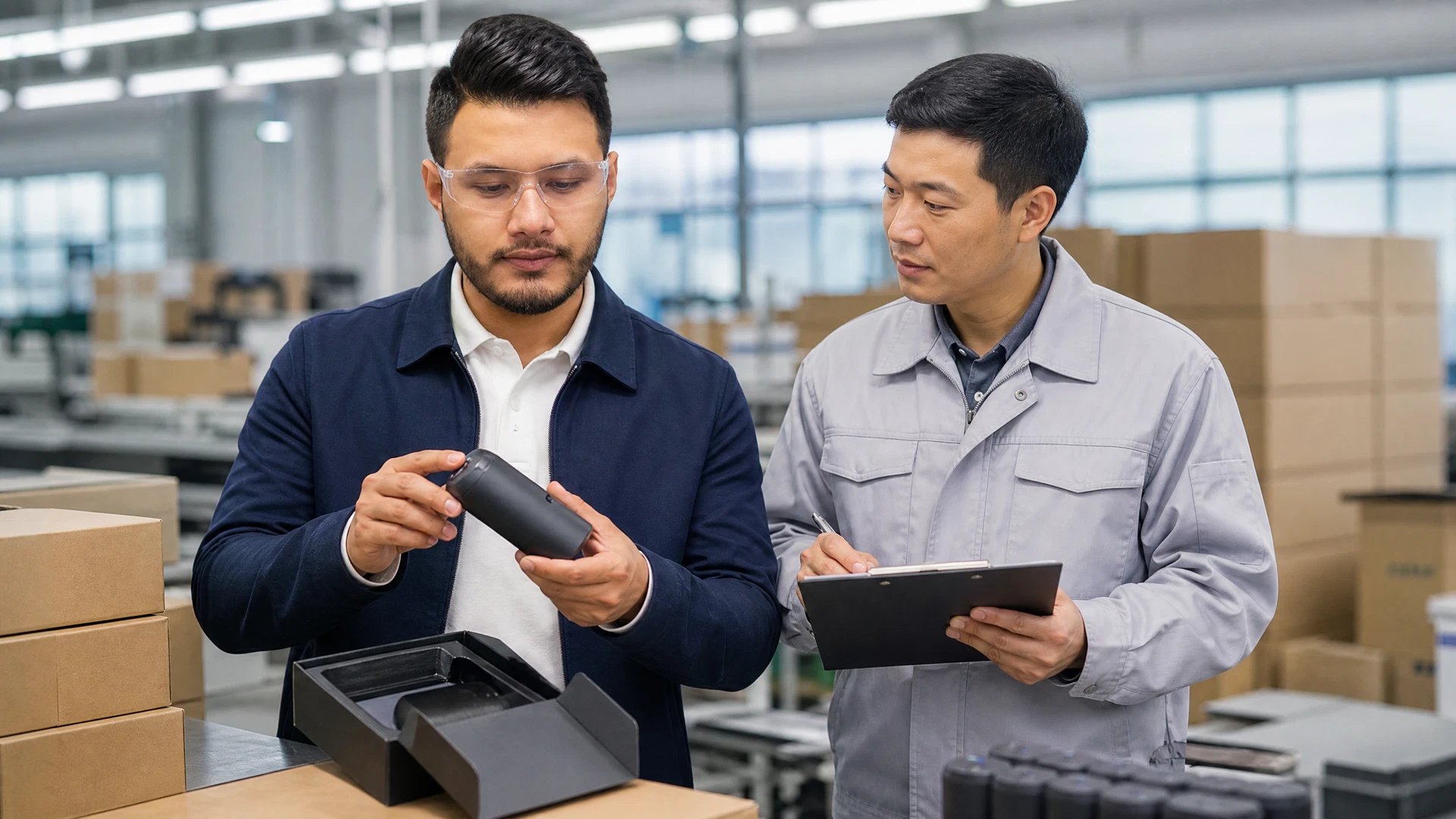
Supplier verification in China is not a single badge, a company-registration screenshot, or a video call. It is a sequence of evidence checks that helps a buyer understand who controls the product, whether the supplier can meet a specific requirement, and how the order will be protected from sample to shipment. This guide helps buyers build that sequence before a deposit is sent.
Define the product before trying to verify the supplier
A vague request makes verification weak. If the buyer only asks for ‘a good price’ on a generic product, almost any seller can answer. Start with the product purpose, materials, dimensions, finish, packaging, quantity, target price, destination, and any required documentation. A product-specific request lets the buyer test whether a supplier understands the actual order rather than merely responding with a catalogue image.
This matters because capability is product dependent. A supplier may make one type of textile product well and outsource another. A factory may have suitable machinery but not the material source, quality process, or packaging capability required for a new order. Verification should therefore ask: can this supplier make or reliably control this particular version, at this quantity, for this market? Generic corporate claims are less useful than product-specific evidence.
Check the commercial identity and operating role
Ask the supplier to explain its operating role. Is it the manufacturer, a wholesaler, a trading company, or a service partner coordinating several factories? None of these structures is automatically unsuitable, but each changes the questions a buyer should ask. A manufacturer discussion can focus on production capability, sample process, materials, and capacity. A trading-company discussion should clarify which factories are involved, how product consistency is controlled, and who will manage inspection access.
Request consistent legal and commercial details: registered company name, business address, contact person, bank beneficiary, quotation entity, and invoice entity. Differences do not automatically mean a problem, but they should be explained before payment. A buyer should know who is receiving funds, who is issuing the production commitment, and who is responsible for resolving an order issue. Keep that information with the quote and product brief.
Ask for evidence that can be compared
Useful supplier evidence is connected to the order: current product photos, a product drawing, material description, process photos, production-video context, sample options, packaging examples, a written lead-time estimate, and answers to specific technical questions. Evidence should tell the buyer something that a generic marketing image cannot. For example, a close-up of a material, a packaging dieline, or a dated photo of a relevant production line can be more useful than a broad factory-tour montage.
Compare evidence across the shortlist. Did each supplier answer the same questions? Did it state the same material, quantity, packaging, and delivery assumptions? Did it identify exclusions? QIMA’s 2026 sourcing guide frames supplier qualification and pre-shipment verification as practical priorities for buyers navigating sourcing risk.[1] A disciplined evidence file makes it easier to qualify a supplier and later define what an inspection should verify.
Use samples as an operational test
A sample tests more than product appearance. It tests the supplier’s ability to follow a brief, communicate changes, package an item, document decisions, and respond to feedback. Send a controlled sample request that includes the required product version, dimensions, branding, finish, accessories, and packaging. When the sample arrives, record what was approved, what changed, and what must be repeated in production.
Do not assume an approved sample automatically controls the production order. Place the final sample notes, photos, and version identifiers into the purchase record. If the supplier used an alternative material, temporary package, or prototype component for the sample, identify it clearly. The goal is to convert the sample into a usable production reference rather than a one-time parcel that creates false confidence.
Build inspection access into the order
A supplier should be able to explain how quality checks are handled and whether an agreed inspection can take place before dispatch. The inspection scope should come from the buyer’s product brief: appearance, dimensions, functionality, accessories, quantity, labels, packaging, carton marks, and any critical defects. Plan the timing before the goods are ready, leaving room for rework or a recheck if a meaningful issue is found.
Inspection is not a substitute for early verification. It is a later control that works best when the buyer has already defined the product. QIMA highlights pre-shipment verification as part of a practical sourcing framework.[1] For a buyer, the important commercial question is whether the supplier accepts a transparent process: a written specification, an inspection point, evidence of findings, and a clear release decision before goods move into export logistics.
Make payment milestones match evidence
Payment controls are strongest when they follow clear milestones rather than optimism. The appropriate structure depends on the order and agreement, but a buyer should know what evidence is expected before each payment stage. That may include an approved sample, final quote, product specification, production update, inspection decision, packing list, or shipping document. If the supplier asks for a change, record the commercial reason and the revised evidence expected.
Avoid treating speed as proof. A fast supplier reply, a polished website, or a platform badge may support a positive first impression, but none independently proves that a specific order will be made to requirement. Verification should keep moving from general identity to product capability, then to sample evidence, quality planning, and shipment release. The stronger the order value or product risk, the more important it is to preserve this trail.
Use findings to decide, not merely to collect documents
Verification produces a decision. A buyer may proceed, request more evidence, change the supplier route, order a sample, narrow the specification, or pause the purchase. Do not collect documents only because a checklist says to. Ask whether the evidence makes the supplier easier to trust with the product and commercial obligation at hand.
A clear supplier-verification process also improves negotiations. When the buyer can point to a defined brief, comparable quote, approved sample, and inspection plan, the conversation becomes less about broad assurances and more about execution. That is the foundation for a repeatable China wholesale supplier relationship.
China supplier verification framework
| Verification layer | Question to answer | Useful evidence |
|---|---|---|
| Identity | Who is contracting and receiving payment? | Company, quotation, invoice, and bank details |
| Operating role | Who controls production or sourcing? | Clear explanation of factory or supply-chain role |
| Product capability | Can this supplier meet this brief? | Product-specific photos, materials, drawing, sample path |
| Quality control | Can requirements be checked before shipment? | Inspection scope and timing |
| Commercial control | What happens before payment and release? | Milestone record, packing list, shipment documents |
Buyer checklist
Use this before you request a quote
- Use a product-specific supplier questionnaire
- Confirm the commercial and payment entity
- Request evidence that directly relates to the product
- Approve and document the sample version
- Schedule inspection before final pickup or loading
- Keep verification findings with the purchasing record
References
- 1. QIMA — China Sourcing for Emerging Economies: Quick Guide 2026
- 2. WorldFirst — How to manage quality control in China
This article provides general commercial information, not legal, tax, customs, product-safety, or regulatory advice. Confirm requirements for your product and destination before purchasing or importing.